The Sunken Harbor Drop, Pt. 3 (the big one)
Pt. 3
I procured elements to add to our rig that would secure it better the following day. A length of stainless chain - costly, but reliable. A 30+ lbs cinderblock, and a shackle to connect the chain to the rig.
Jim would be accompanying on this dive, he hadn’t gotten out on the water since January, a shame since he is an avid waterman and capable spearfisherman. Because of his absolutely parched self, it was imperative to do a little diving and spearfishing first, then moving on toward our barrel station. It seemed only fair, seeing as he had been out of the ocean for so long, and I needed his safety for our more spirited venture.
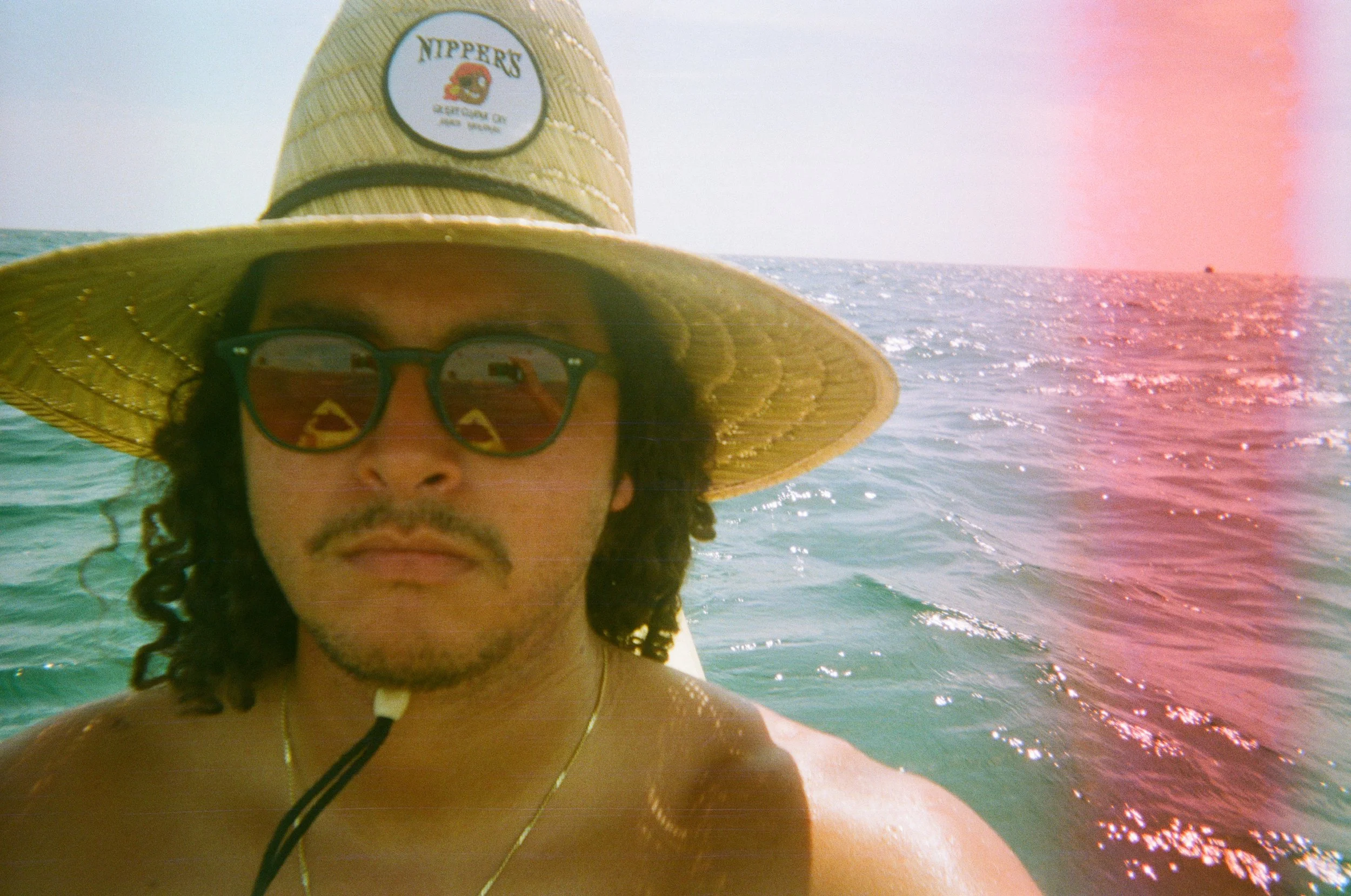
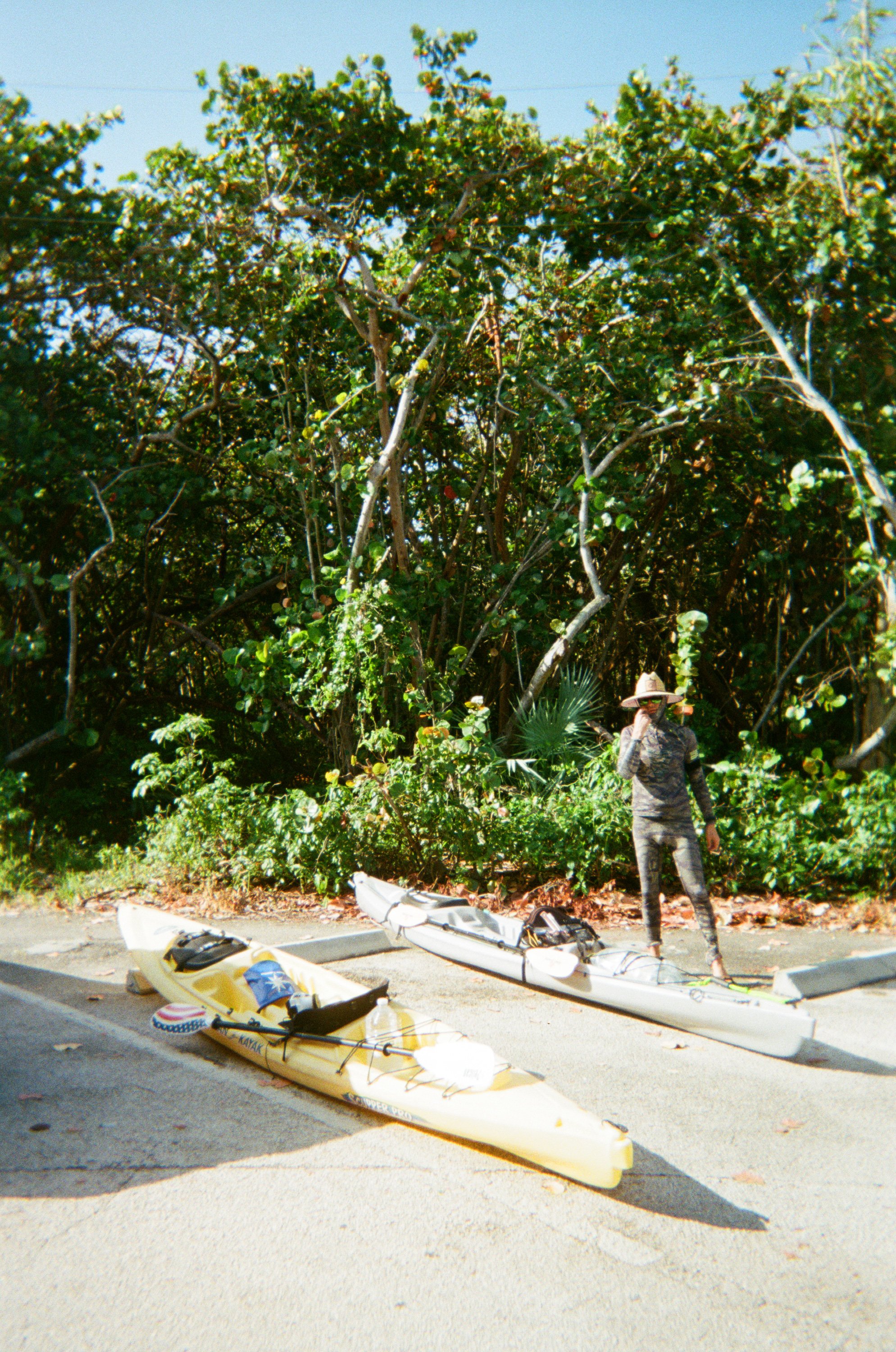
A mile of paddling to our first destination reef was a little more tiring than usual, although not unexpected that we would feel this way in full dive gear and exposed sunlight. We anchored up, and noted a squall line to the north - far enough from us to be immediately concerned about it, but a potential threat nonetheless.
I dip in first, eyeing the anchor line (safely secured) and assessing the viz (not great… but workable). Immediately below, I spot a familiar form sinewing the boulders 26’ down. Unsure of the hogfish’s size, I follow it from above until it loses me for a second. I haven’t landed one this season, and this would be a treat if it were legal and I could take a merciful shot. Eagerly ducking down like a greedy cormorant stalking undersea prey, I regained visual acquisition of the hogfish and stealthily followed it.
It was swimming with a female hogfish - these fish often operate in “harems,” with one male protecting oftentimes four to five females in an area. It was important to not take the females, despite their legality, to increase the odds of this fish population rebounding after decades of decimation. That, and their sexual dimorphism allows a female hog to transition to male phase in about half a year, ensuring the local population continues, and taking some pressure off the species. They’re an easy fish to spear, and when abundant, could quickly be depleted from a reef system, affecting populations for ages… as has been done in these environs.
I lined up a head shot once I was sure it was of legal size and pulled the trigger, the spear flying in an instant and immobilizing the beautiful fish. I captured and immediately dispatched him, and began field dressing the fish for dinner that night: Braining, gilling, gutting and scaling in the ocean.
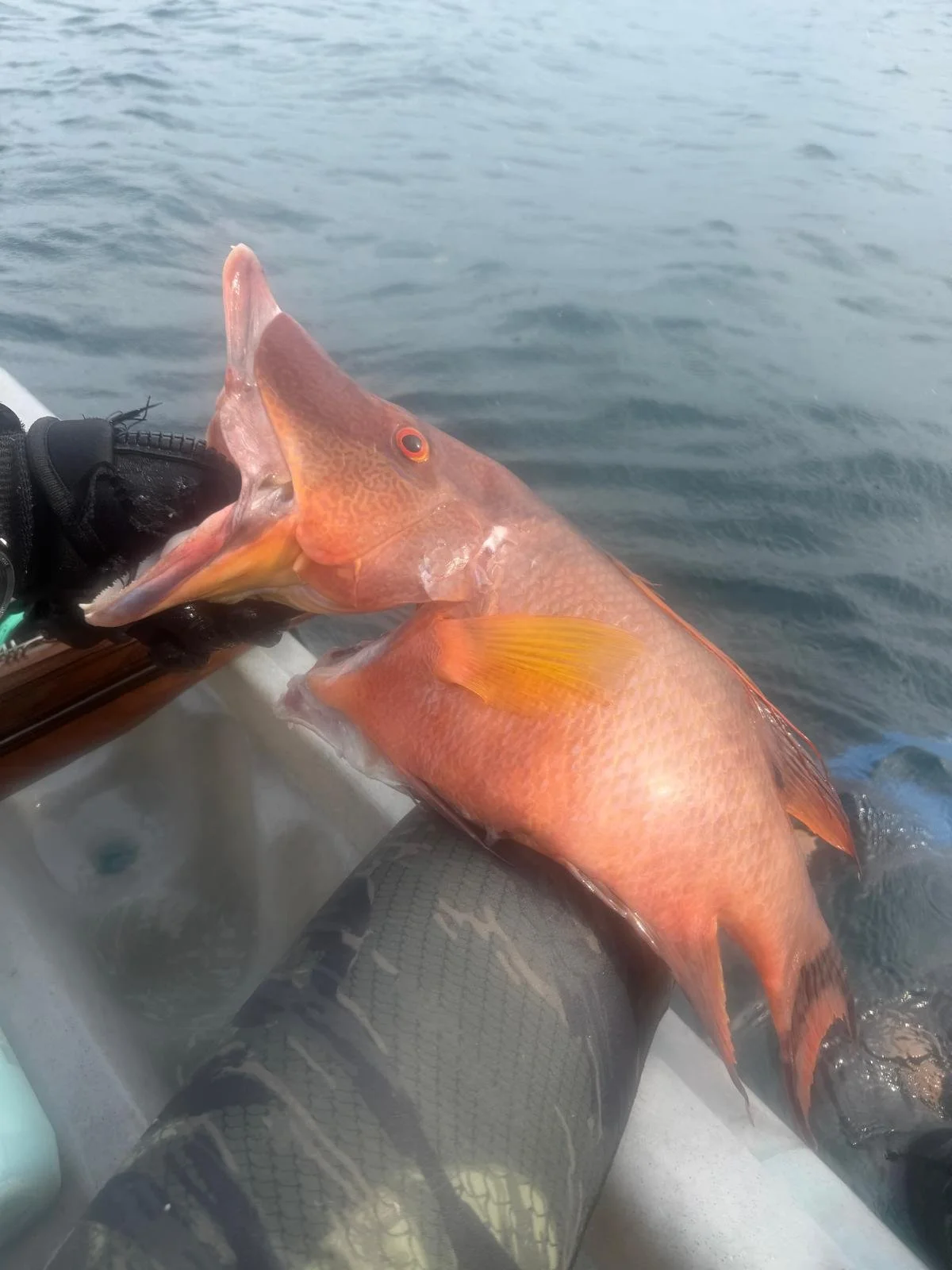
The dressed hogfish on ice, my hunt had ended, but I remained on safety duty for Jim, who was on the hunt for his own. In fact, he could’ve landed a meaty jack from a sizable school encircling us if he hadn’t broken wind on his initial descent, which startled the school and sent them packing. He won’t live down this humorous ignominy between us.
As he continued hunting, we made note of the worsening conditions, and I swam back to the boat to check the forecast. The radar held accurate with storms roughly 5-8 miles to the north, headed toward the Bahamas, but a new cell had developed a couple miles north, on the coast and closer to us. Winds had picked up, coming from that direction now as a result of the storm, bringing heavy chop along with it.
We knew we had to call it, as much as I might’ve wanted to ride it out for a while. My hopes of securing the barrel station were dashed, but there was no time to pay that any mind with the sudden change in conditions. So, we pulled anchors and began hurriedly stowing our gear, everything from dive masks to flags.
The winds blew us south, and the waves followed, gradually intensifying with each successive period. We were free floating over dark waters by now, and the sky became inkier above us. I noticed Jim was having trouble putting away his gear… as a matter of fact, it looked like he was still hung up on the anchor part of the process! Jim’s anchor line had become snagged in worn-out cargo netting on the bow, and became a stressful task as the storm picked up and we were being tossed about.
I pulled up alongside him and we secured our kayaks together to minimize the drift and separation, which stabilized his task environment. He was able to work it out much more easily, but the experience had shaken him; indeed, high-stress loads in unforgiving conditions will do this to one. I had to concede, as much as I had been willing to wait out the weather and press on toward the barrels initially, we both concurred we had made the right move by calling it for the day, for safety is of paramount importance out here. With that, we agreed we would head toward shore, staying close by one another in case conditions worsened even more so.
We paddled with the flow of weather toward our exit point on shore, the same place we entered the ocean, but by the time we reached the first reef line, conditions had already improved by a great margin. Perhaps we could do some more diving there? I peered over the side of my kayak and saw deteriorating conditions with sufficiently strong current driving it. Stick to the plan, we’re done. What we saw ahead of us appeared to be the final hurdle to pass: The storm system, the hydra with its many tentacles, also whipped up giant waves as it moved across the Straits of Florida, and these waves resonated in our direction, ending in giant, booming waves along the shore. The set had a period of maybe 12 second intervals, but each wave pounded the beach in powerful, short bursts.
We approached the beach short of the surf zone, watching incoming waves and those crashing into sand to gauge when to send it toward the shore. There appeared to be an opening after a set of seven, maybe eight waves, so we positioned our boats and began paddling toward shore with firm strokes, increasing in strength and speed as the stronger set of waves passed us and the calmer waters flooded in. These smoother conditions allowed Jim and I to make it ever so gingerly onto shore during the gentler period of shore-lapping waves, and pull our kayaks up berm before the crashing recommenced.
Depleted of energy, we packed up and stowed our gear to go home and recover. At least we have a tale to tell, and a fish to share from this brief expedition.
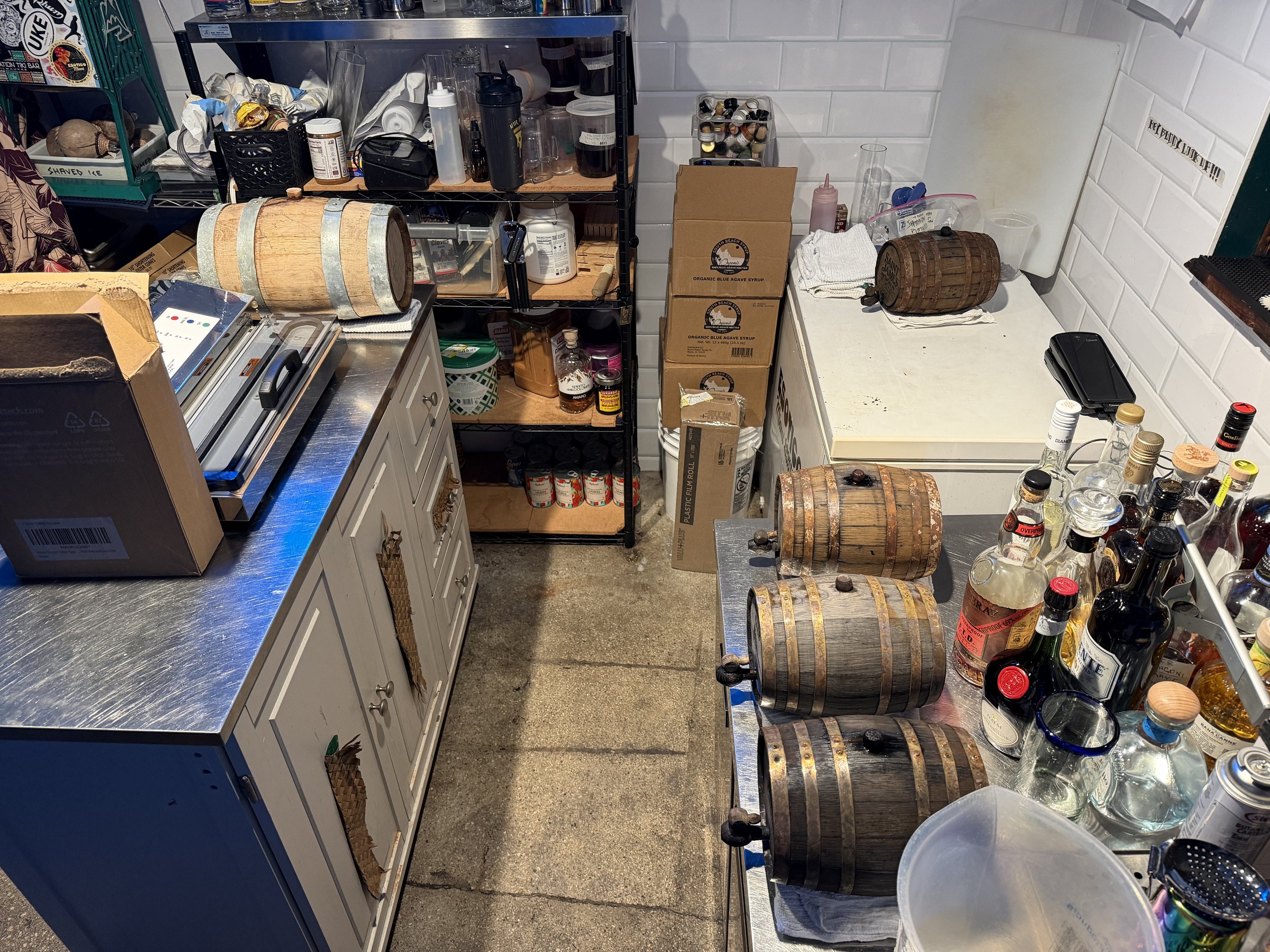
I must hold out hope for our barrels as their fate is uncertain.
out again
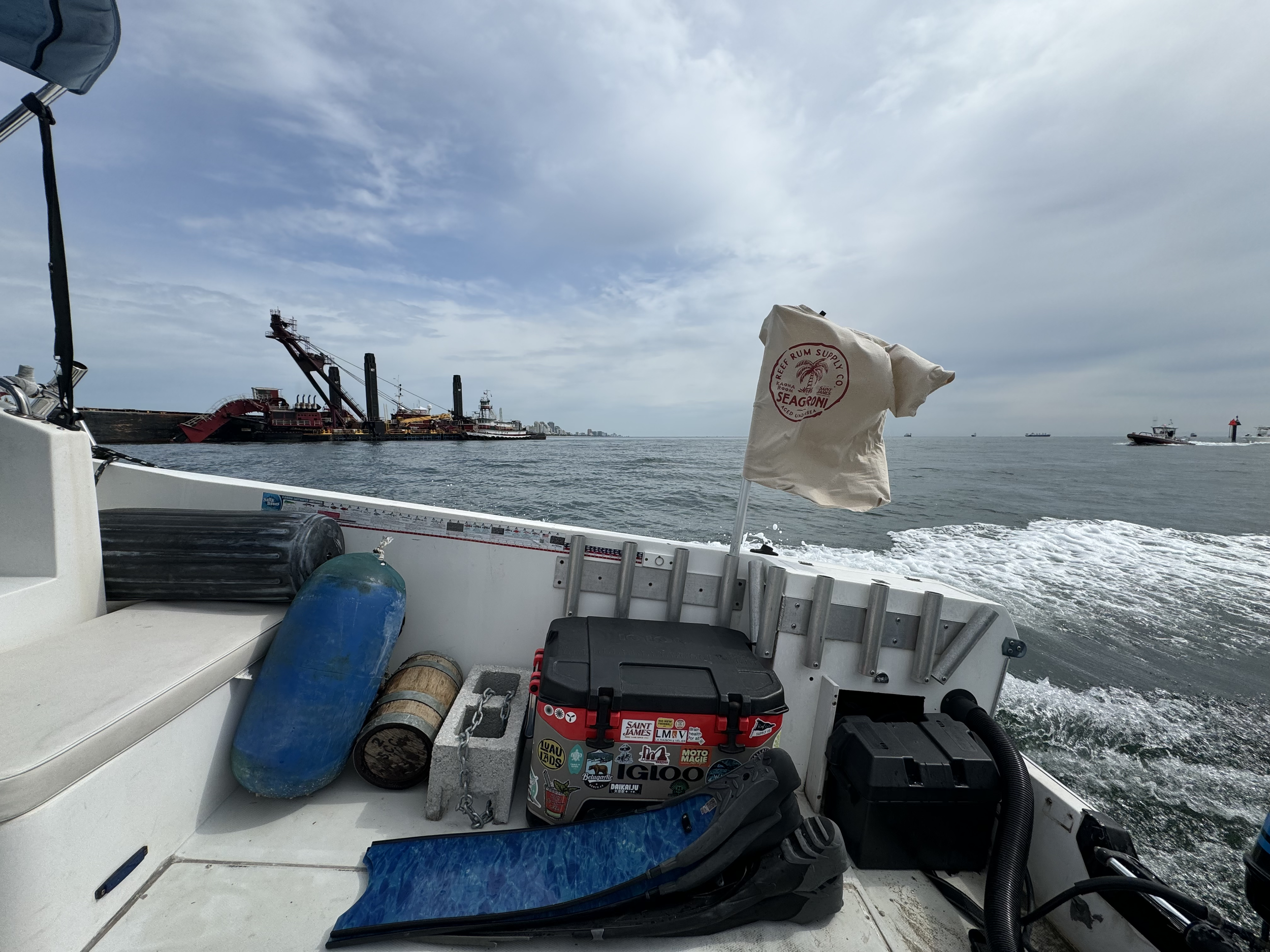
Billy cast our lines to the dock, and Sea Sauce purred away into the canal with ease, navigating the canals and reaching the inlet in little time and without event. We set out to our destination with flat (Or damn near it!) waters and the lightest of traffic. Sea Sauce had a tendency to lose power as she increased in speed, so I was hesitant to open the throttle all the way. This voyage, coincidentally, was also her first voyage after a brief retrofit, and her first time at sea with us. She planed easily, reaching 12 knots, as I guided her steadily through the cut and into open water. The sky was cloudy, with a thick line of gray cover to the southwest. We reckoned we had all morning til we had to head back, ample time to get our job done.
After 10 minutes of running, we approached the marker, just as it showed on our charts. We slowed down, in preparation for identifying the buoy and anchoring as near as we can get to it. Well, at this point, we weren’t sure where it would be - it might’ve drifted further away from where it had been, or we might’ve lost it entirely - our worst fear. We settled into the current coming from the southwest and set the anchor, still no buoy in sight. Not a good sign… but perhaps we will have better luck once we’re searching in the water.
But we were in for a surprise when we peered over the boat’s gunwale and witnessed a scattered mess of organisms floating not only on the surface but deep into the water column. Indeed, this was more bizarre than the plentiful sargassum patch one sees ad nauseum this time of year. These were, what… writhing, spiraling and twisting and pink and worm-like. And a bubbling slick, viscous and white and sinewy washing through occasionally, reminiscent of an oil slick. But our motor was sound (despite the known throttle issue) and I could identify these creatures from diving at night, having seen them crawl the sandy bottom scavenging for food amongst the detritus. Polychaete worms, a centipede-like worm with bristles as irritating as exposed fiberglass on skin, if one were to come in close contact with them. But what were they doing up here? In broad cloudy daylight? Billy gingerly tapped away at his phone, and with a few quick searches, found an article on this species, detailing polychaetes’ mating events during “certain lunar cycles.” Well, we had timed this dive for high tide, so what part of the cycle was it? This is normally something I’m aware of as one who studies tides, but in anticipation of today’s proceedings, had completely forgotten to check. Turns out it was a full moon that day. So of course, we had to be in just the right spot at just the right time - a few hours past moonset, no less - to behold this ancient orgy play out before our very own eyes..
Do we dare swim in this mess? Bristle bumping seems as painful as swimming through clouds of jelly fish, and we didn’t have rashguards for this dive, just trunks and snorkeling gear. And the thought of making our way through that visible slick of invertebrate eggs and spunk, well, it’s just repulsive. But really, aren’t we already breathing and swimming in mating matter all the time, anyway? Perhaps our skin and hair would benefit from the boost of proteins? We could wait a day and see if we could get out again, but no we couldn’t, because our window was closing as weather forecasts and travel plans closed in. This was it.
I was willing to dip my legs in off the dive platform, just to see if they would sting upon impact. The water was 82ºF, warm and ideal for open water swimming. After a couple minutes, the worms caused no detectable stings, so I decided to immerse myself whole in the miasma. Viz was fine, not perfect but certainly workable. “We’re gonna be OK,” I told Billy, but I cautioned him, letting him know he didn’t have to join me if he didn’t want to. Of course, he eagerly grabbed the underwater camera and jumped right in. He is an expert shooter, capturing from above the waves our many adventures at sea. But today, he was in the drink, becoming a true underwater cameraman.
We began our search for the buoy, and slowly swam in the direction we expected it to be, given the weeks of movement and agitation the ocean had effected upon the rig. Not more than 30 seconds into our swim and we’d found it, barrels intact and holding steady - a huge sigh of relief! At least we could go home with something to show for this effort. I prepared for the dive like every other, breathing up calmly, focused and then bent 90º downward to step deeper into the sea and pluck these exotic fruits from their vine. Forget these fuckers, these worms - here I come! And kick-kick-kick to the seafloor, not a worm felt. I arrive at the rig and begin the task of unclipping barrel bags from the chain. Some are rather stuck after a month at sea and need coaxing. One comes off easily, but a position change is needed for another to come loose… there we go. It’s somewhat tricky business managing this many unwieldy bags at once in negative buoyancy, but I manage and begin the ascent to the surface, a cool wave of relief washing over acknowledging our accomplishment. My dive computer shows 1:00 roundtrip, a full 30 seconds longer than usual, and I feel fine.
I clip the awkward assembly of bags together, as Billy and I begin our swim through polychaete ecstasy to the dive platform on the boat. Once we reach it, we tackle our next challenge of getting the bags up in the boat. Billy struggles a bit between handling the camera and getting a firm hold of the boat. The chop has picked up a little since we began our swim, and staying in place is proving to be a constant task. He manages to hold two bags while I hoist one over the transom - in it goes. The other two follow in short order, and we climb aboard, dripping with seawater and Lord knows what else. As we remove the barrels from the bags, we encounter copious amounts of sand along with seawater, sand making a huge mess on deck. One by one, we empty the bags of their barrels, cleaning the bags over the transom to dump sand back where it belongs. Mitigating sand on a boat is a good idea, and makes operating it easier.
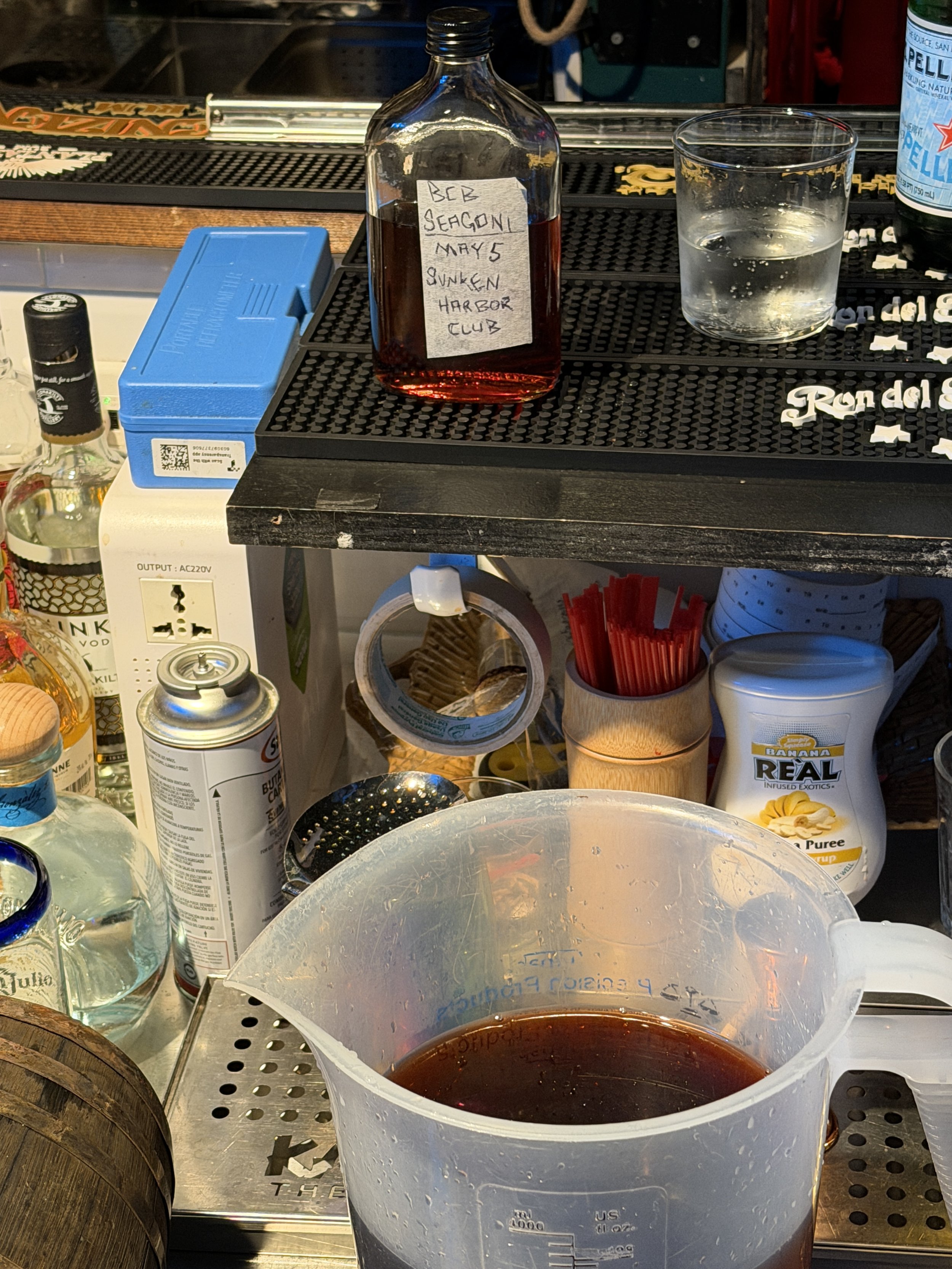
One bag is particularly filled with the stuff, and it seems the only move is to carefully undress it of its harness and remove the large barrel within it in the ocean, lest we create an artificial beach on the deck. I hoist it back onto the dive platform and open the bag carefully - sand is pouring out like clouds of milk billowing down into a cup of hot, black tea. And then, in an instant, a large tear in the bag appears. And then, in an instant, the barrel falls through the bottom of the bag (In it goes). And then, I jump after it in vain, into the melange of milks, eyes open as I no longer had swim gear on, frantically searching for the barrel. I thought I held it for a moment, but the heavy, slippery vessel fell through my hands with its unexpected momentum and sank to the floor. I abandoned the attempt to save it and swam up, knowing I could regroup topside and gear up to properly salvage the hulk of Seagroni sitting on the seafloor.
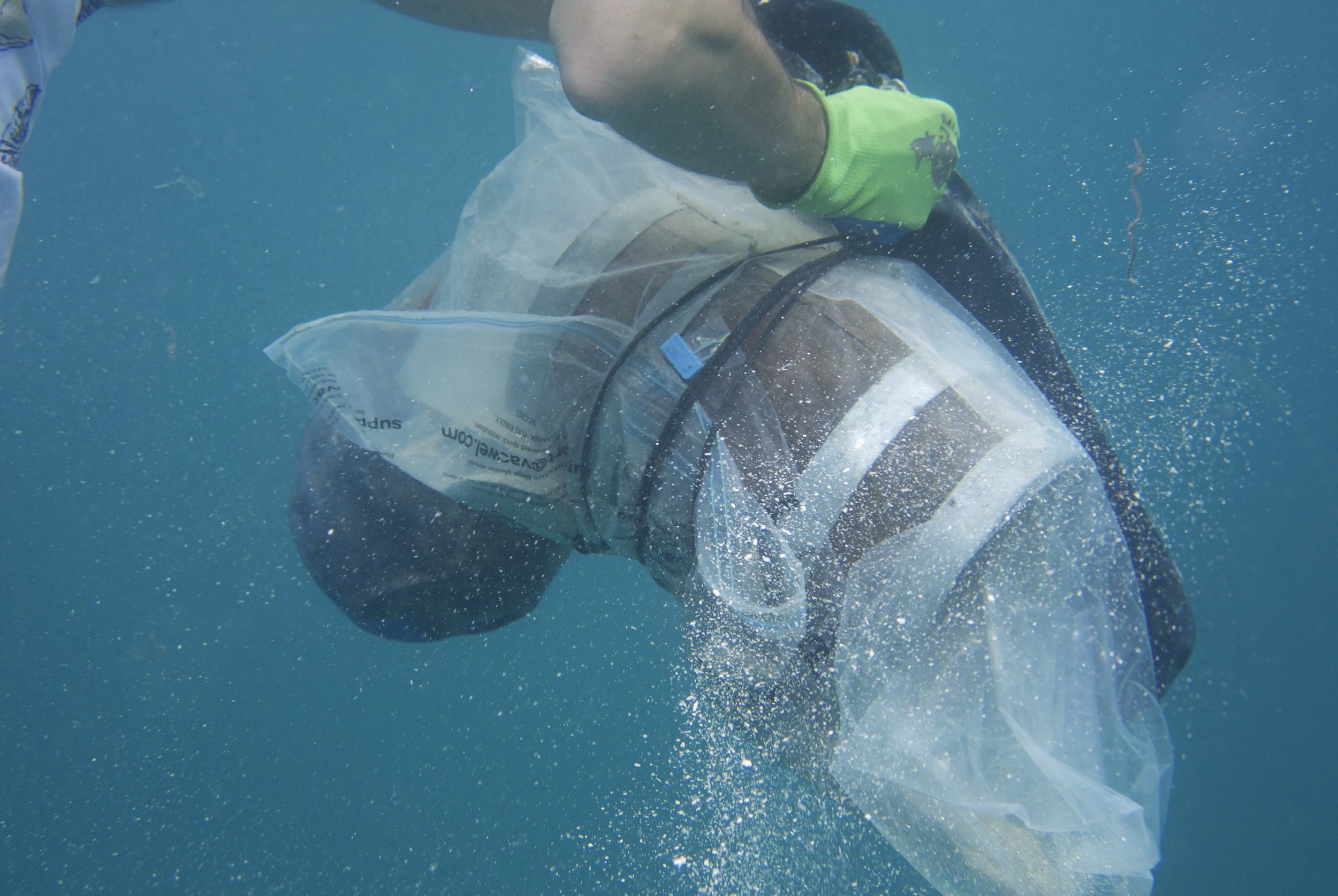
I hop back in the boat and don mask, snorkel and fins, setting off once again to the bottom for a barrel. It looks so small from the surface, and as I swim closer toward the barrel, it doesn’t magnify to near actual size until right upon it. Cradling the barrel, I swim steadily up to the surface, bounty intact.
After boarding the boat and securing the barrels and gear, we start the engine and haul anchor. The weather system from the south is approaching closer now, distant but imminent in its purpose. By now, we’ve worked up quite an appetite and need nourishment. The drinks from the cooler rehydrate us quickly, but a hearty meal is needed.
We pass through the inlet and back into the labyrinth of canals just outside the harbor, and decide to visit a favorite dockside diner of ours. Billy and I tie up to the pilings and head to a table in the shade, despite the overcast skies becoming slightly more ominous. It might rain, after all. We quickly order bloodies and more water, of course, with coffees and breakfast tostadas on the way.